
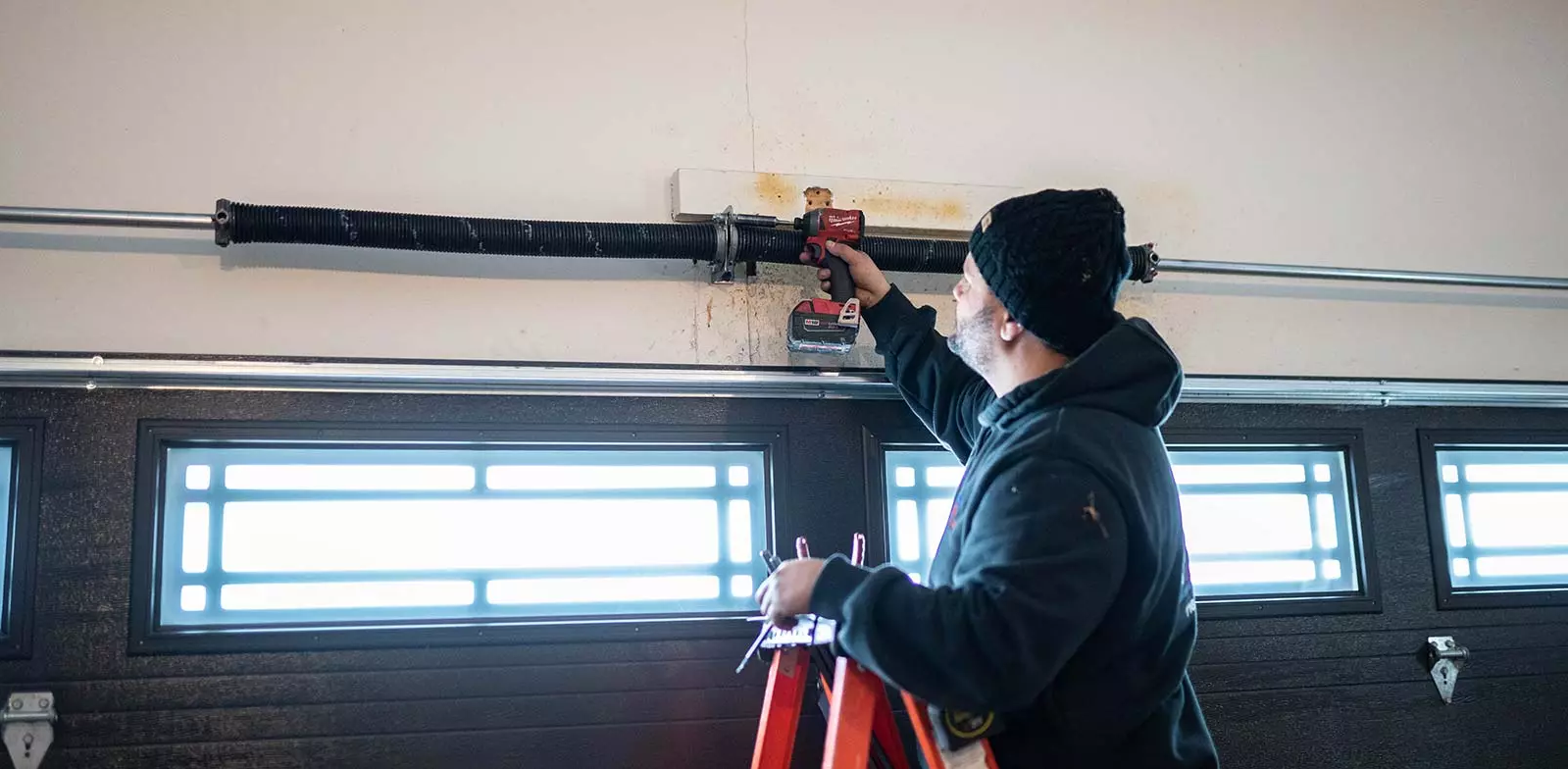
Understanding the Impact of Temperature on Garage Door Spring Replacement Needs
Extreme weather changes do more than just affect your comfort; they significantly impact the mechanical integrity of your home’s largest moving part. Fluctuating temperatures directly influence the lifespan of metal components, often accelerating the timeline for garage door spring replacement.
Whether you face the sweltering humidity of a Florida summer or an unexpected cold snap, your garage door springs bear the brunt of thermal expansion and contraction. At Bradenton Florida Garage Door Repair, we see firsthand how these physical changes affect local systems. Understanding these shifts helps homeowners anticipate when their system might fail and why seasonal maintenance is non-negotiable for safety.
How Thermal Expansion and Contraction Affect Steel
Garage door springs are made of high-tensile steel wound under extreme tension. Metal expands in heat and contracts in cold. In areas with drastic temperature swings, this causes constant microscopic shifting.
This cycle creates internal stress. Over time, the metal becomes brittle. During a sudden cold snap, the steel contracts and loses flexibility. If the spring is aging, this added stress often causes the coil to snap.
Cold Weather and Brittle Fractures
Cold is the primary enemy of high-tension springs. Dropping temperatures reduce the metal’s elasticity. Since the spring supports several hundred pounds, any loss in flexibility leads to a brittle fracture. You will likely hear a loud bang when the coil breaks. While lubrication reduces friction, it cannot stop the physical changes caused by the cold.
Heat, Humidity, and Corrosion
Heat and humidity cause a slower path to failure. High humidity levels create surface rust. This rust acts as an abrasive, increasing friction between coils during operation. As heat causes the metal to expand, rust can fuse sections together. This creates uneven torque, wearing down specific parts of the spring much faster than in a climate-controlled environment.
Maximizing Spring Lifespan Through Seasonal Maintenance
You can prolong the life of your hardware by performing basic checks during the transition between seasons. Inspecting the springs for “bleeding” (reddish-brown dust that indicates rust) and applying a lithium-based or silicone-based lubricant can reduce the thermal stress on the metal. However, maintenance only delays the inevitable. Most springs feature a rating for 10,000 to 15,000 cycles. If your springs have survived several years of intense temperature swings, they are likely approaching their breaking point regardless of how much oil you apply.
Professional Inspection vs. DIY Risks
Never attempt to adjust or replace these components yourself. Torsion springs store enough energy to cause severe injury or property damage if they release unexpectedly. A professional technician possesses the specific winding bars and safety gear necessary to manage the tension safely. They can also identify flat spots or “winding gaps” that the untrained eye might miss, allowing you to schedule service on your own terms rather than dealing with an emergency break in the middle of the night.
If you notice your door struggling to lift or making a straining sound during a cold morning, it is time to prioritize garage door spring replacement. Addressing the issue early prevents the opener motor from burning out due to the excess weight of a dead-lift. For homeowners in the local area, Bradenton Florida Garage Door Repair provides expert diagnostics and high-cycle spring installations to ensure your system withstands the local climate year-round.